
Priya Nandakumar, Staff Writer.
You already know the moment. You lean into the bathroom mirror at 7 a.m., draw a clean line along your lash margin, and by the time you park the car it has migrated into a smudge under your left eye. You go back to the drugstore aisle and read six labels that all say “waterproof” and “24-hour wear,” and none of them tell you which one is lying. Here is the useful fact most people never learn: “waterproof” is not a single standard anyone enforces. It is a marketing word a brand can apply to almost any formula that resists a splash test in a lab, which is a much lower bar than surviving a humid commute, a workout, or actual tears. This guide walks through what actually separates a liner that survives your day from one that survives a photo shoot under studio lights, so you can judge a formula yourself before you commit to a full-size tube or pencil.
- Waterproof and smudge-proof are different claims: a formula can repel water in thirty seconds on a lab card and still slide once it meets warm, oily skin at the inner corner of your eye.
- The 24-hour patch test on your wrist tells you more than the packaging: how a liner behaves on thin skin under running water predicts lash-line performance better than any label copy.
- Removal method matters as much as application: the wrong remover, or plain rubbing, undoes hours of wear and can strain the lashes more than the makeup itself.
Why “Waterproof” Is A Spectrum, Not A Promise
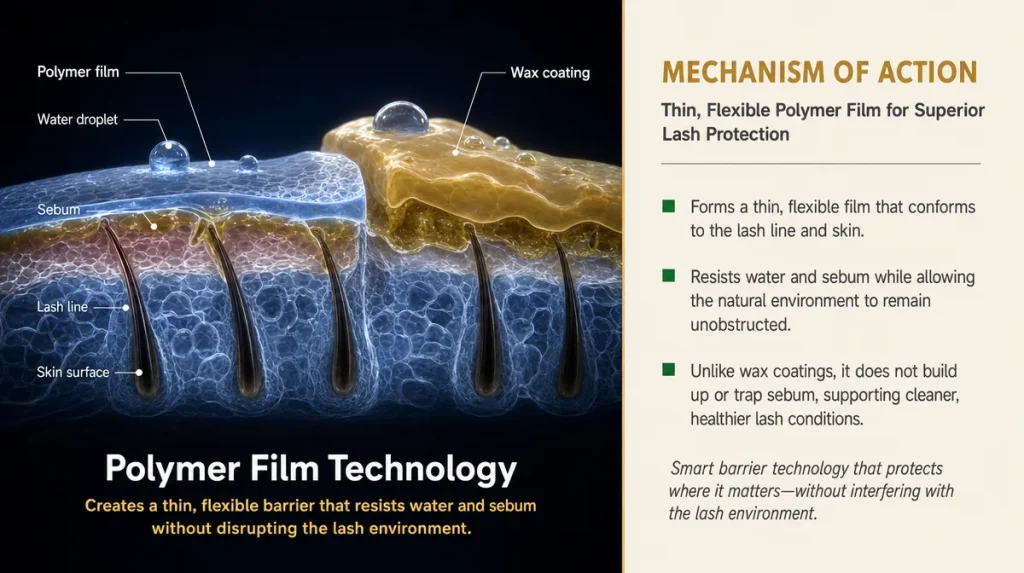
Think of it the way you’d think about two raincoats. One is a tightly woven, flexible shell that beads water and flexes with your arm. The other is a thick wool sweater that resists a light drizzle but soaks through in a downpour. Eyeliner formulas work on a similar principle. Some rely on film-forming polymers that dry into a thin, flexible plastic-like layer sitting on top of the skin, closer to the raincoat. Others rely on waxes and oils that coat the lash line and physically block water from reaching the pigment, closer to the sweater: fine in light conditions, less reliable once real heat, sweat, or oil from your own skin enters the picture.
A 2021 study in the International Journal of Cosmetic Science tested several long-wear eye formulas under controlled humidity and found that polymer-film formulas retained significantly more pigment after six hours of simulated wear than wax-based ones, though both categories degraded faster once researchers introduced oil to mimic natural sebum. That single detail explains why a liner that survives a splash test can still fail on an actual face: sebum, not water, is often the real enemy.
Reading The Formula Type Before You Buy: Gel, Liquid, Or Pencil
Once you know that oil is the real test, the format on the shelf starts to make more sense. Gel liners, usually sold in small pots with a brush, tend to lean on film-forming polymers and dry to a slightly rubbery finish. They generally hold up well through humid afternoons but can feel tight on very sensitive lids.
Liquid liners with a felt tip or brush applicator vary the most: some brands use a polymer-heavy formula built for precision and wear, others prioritize pigment intensity and use more wax to help the tip glide, trading some water resistance for ease of application.
Pencils sit closest to the wax end of the spectrum, which is part of why so many people notice their pencil liner “living” under the eye by midafternoon. That is not necessarily a flaw. Pencils are often chosen for a softer, smudged look, and a formula built to smudge on purpose behaves differently than one built to stay crisp. The mistake is expecting a soft kohl pencil to perform like a precision liquid liner simply because the label says waterproof. Match the format to the finish you actually want, then judge wear within that category rather than across it.
The 24-Hour Patch Test That Tells You More Than Any Label
Before you commit a full look to a new liner, run a small test at home. Draw a short line on the inside of your wrist, an area with thinner skin than your hand but similar oil levels to your eyelid. Let it dry fully, about ninety seconds for most formulas, then hold your wrist under lukewarm running water for ten seconds. Note whether it beads and holds, smears at the edges, or washes away outright.
Repeat the same line the next morning, but this time do not wash it off right away. Go about your day and check it again after eight hours, without touching it. If it has migrated into the fine lines of your wrist or turned patchy, it will very likely do the same at your lash line, where skin moves constantly and body heat runs slightly higher than on your arm.
This two-part test costs nothing beyond a few minutes and catches most formula failures before they happen on your actual eyes. It will not perfectly predict tear resistance, since eye fluid behaves differently than tap water, but it reliably filters out the liners that were never going to survive a full day regardless of what the packaging promised.
Testing Wear Where It Actually Counts: The Inner Corner And Lower Lash Line
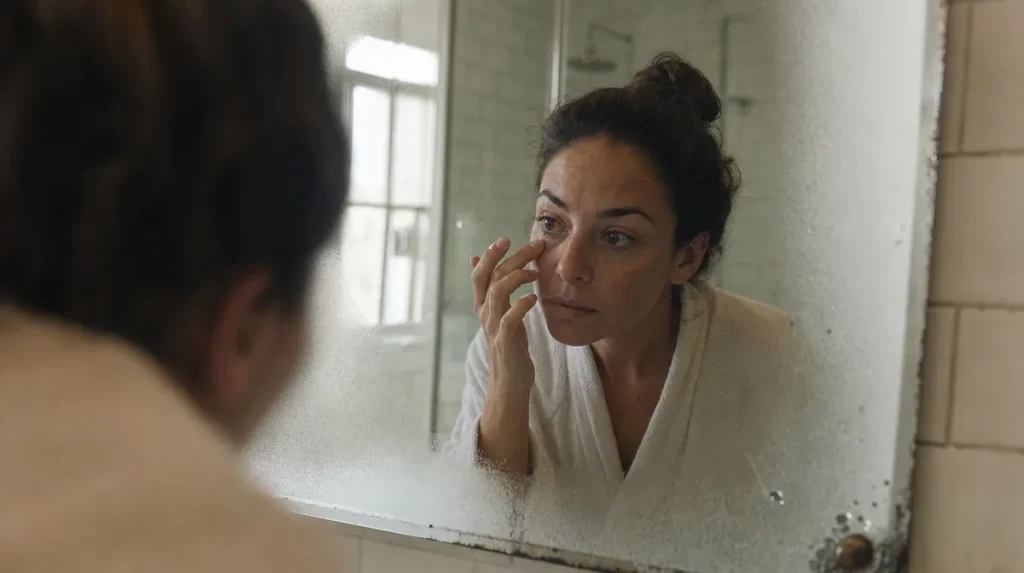
Most wear failures do not happen along the top lash line, where skin is drier and flatter. They happen at the inner corner, where tear ducts sit, and along the lower lash line, where oil from the T-zone tends to migrate by midday. If you want an honest read on a liner, check those two spots specifically, ideally at the six-hour mark and again near the end of your day.
A simple visual check works better than touching the area, since fingertips can smear a liner that would otherwise have held. Look for a fine, hairline transfer just under the lash line rather than a dramatic smudge: that thin line is usually the first sign a formula is starting to lift, well before it becomes visible to anyone else.
Humidity changes this test meaningfully. On a humid East Coast summer afternoon, a formula that performed well in a dry, heated office in January can behave completely differently, since higher ambient moisture combined with sweat gives water-resistant coatings more to fight against. If you travel between climates or simply live somewhere with a real change of seasons, it is worth testing a liner in both conditions before deciding it has earned a permanent spot in your bag.
The Mistakes That Undo Even A Strong Formula
The single most common mistake is skipping any lid preparation on oily eyelids. A liner applied directly onto bare, naturally oily skin has to fight sebum from the moment it goes on, regardless of how well it performed in a lab test. A thin layer of oil-absorbing powder or a dedicated eye primer gives even a mediocre formula a fighting chance, and gives a genuinely strong formula the conditions it needs to perform at its best.
The second mistake is rubbing rather than dabbing during the day. When makeup starts to feel itchy or a lash flutters against the skin, the instinct is to rub. Rubbing breaks the film or wax layer mechanically, creating exactly the smudge people are trying to prevent. A light dab with a clean fingertip, or better, doing nothing at all, preserves far more wear.
The third is storage. Liquid and gel formulas can dry out or separate if left uncapped or exposed to heat, changing their water resistance even if the ingredient list has not changed. A liner that performed well when new may behave differently three months later if it has been rattling around in a hot car or a sun-warmed bag. If a formula suddenly seems to fail that used to work, the tube itself, not your skin, may be the reason.
Judging Longevity: How Many Hours Is Realistic, And How To Time It
Packaging claims of “24-hour wear” describe a best-case scenario tested under specific lab conditions, not a guarantee for your particular day. A more useful way to think about longevity is in blocks: most well-formulated waterproof liners can reasonably hold a crisp line for six to eight hours of normal indoor activity, and a softer but still recognizable line for up to twelve.
To judge this fairly, time your own test from the moment of application, not from when you leave the house. Note when you first see any transfer at the inner corner, and note separately when the line has faded enough that you would want to touch it up. Those are two different failure points, and conflating them is how people end up disappointed by a formula that was actually performing reasonably well.
Activity level matters more than the clock. A liner tested during a low-key office day will always outperform the same liner during a humid outdoor event, a workout, or a day that involves crying, happy or otherwise. If you need a liner specifically for high-heat or high-emotion occasions, such as a wedding or an outdoor summer event, test it under those exact conditions beforehand rather than trusting how it performed on an ordinary Tuesday.
Marketing Words Versus What A Lab Checklist Actually Covers
Terms like “smudge-proof,” “budge-proof,” and “transfer-resistant” sound like they measure the same thing, but they often describe different tests entirely. “Smudge-proof” typically refers to resistance to a finger or fabric rubbing against dried product. “Transfer-resistant” usually refers to how little pigment comes off onto a surface like a pillowcase or a phone screen. Neither term reliably predicts how a formula behaves in humidity or against natural oils, which is the failure most people actually experience.
The kind of rigorous, repeatable lab testing that outlets such as the Good Housekeeping Institute have built a long reputation on, controlled panels, timed wear checks, and standardized conditions, is a genuinely useful model for thinking about your own at-home test, even without access to a lab. The goal is consistency: testing the same way, under the same conditions, each time you try a new formula, so you are comparing performance rather than comparing marketing copy.
Ingredient lists can help distinguish real claims from vague ones. Formulas listing film-forming ingredients near the top, alongside a shorter list of waxes and oils, tend to lean toward the water-resistant end of the spectrum discussed earlier. A very short, wax-heavy list is a reasonable clue that the water resistance will be milder than the front-of-package claim suggests.
Matching Your Removal Method To Your Formula
A liner built to resist water will, by definition, resist plain water and a cotton pad at the end of the day too. This is where a lot of unnecessary tugging happens, and tugging near the lash line is a habit dermatologists generally caution against, since repeated mechanical stress on that area can contribute to lash shedding over time. The American Academy of Dermatology’s general guidance on removing eye makeup recommends a gentle press-and-hold approach rather than rubbing, using a remover suited to the formula rather than forcing a standard cleanser to do the job.
For polymer-film and gel formulas, an oil-based or bi-phase remover breaks down the film far more effectively than water alone. Apply it to a cotton pad, hold it against closed lids for several seconds to let it dissolve the film, then wipe gently outward rather than scrubbing back and forth.
For wax-based pencils, a balm or micellar water often does the job with less product, since wax responds well to gentle warmth and light pressure. Whichever method you use, finishing with a swipe of plain micellar water or a splash of lukewarm water removes any residue left behind, which matters most for anyone who wears contact lenses or has sensitive eyes.
Key Takeaways
A genuinely water-resistant liner is built on film-forming polymers rather than wax alone, and the real test of any formula is oil, not water. Judge a liner with a simple two-day patch test on your wrist before trusting it to a full day on your face, and check wear specifically at the inner corner and lower lash line, where failure actually starts. Match your removal method to your formula rather than reaching for whatever is nearest the sink, since gentle, targeted removal protects both your results and your lashes.
A Practical Checklist Before You Commit To A New Liner
- Patch test on your wrist: apply, let dry, rinse after ten seconds, and check again after eight hours untouched.
- Note the format: gel and polymer-based liquids generally outlast wax-heavy pencils in humidity and oil.
- Prep oily lids with a light powder or primer before applying, rather than going in on bare skin.
- Check wear at the inner corner and lower lash line specifically, not just the top line.
- Dab, never rub, if a liner starts to itch or flutter during the day.
- Choose your remover to match your formula: oil-based or bi-phase for polymer and gel, balm or micellar water for wax pencils.
- Retest any liner that has been stored in heat or left uncapped, since performance can change even if the label has not.
This article is for general information and does not replace advice from a dermatologist or eye care professional.
Individual results vary depending on skin type, climate, and how a product is applied and removed.